
Whales, the biggest wallets holding thousands of BTC (1000 BTC is around $66-69M USD as of writing this), triggered the drop in BTC price by liquidating large positions in coordinated waves during late January and early February 2026.
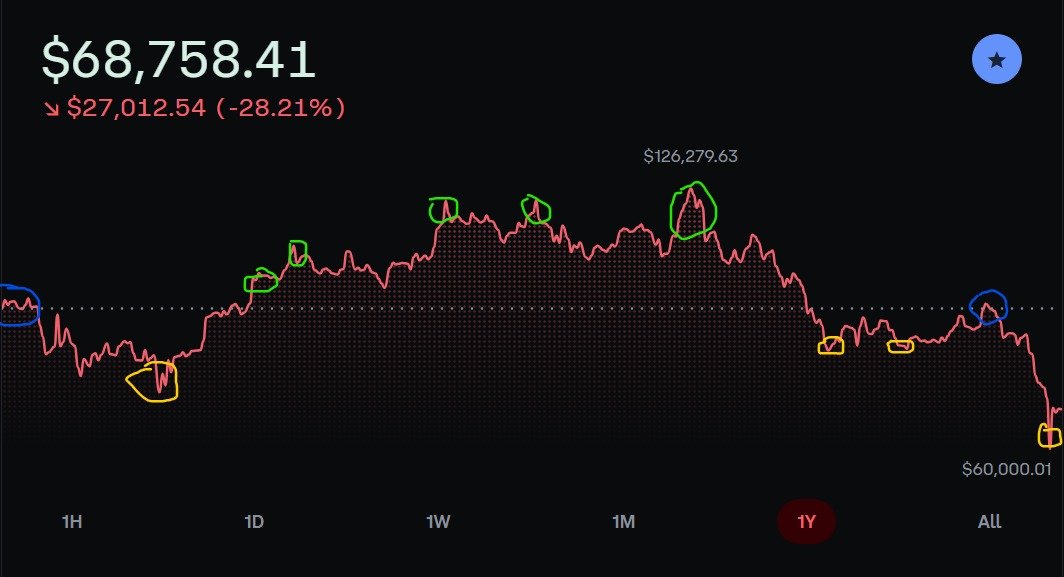
On-chain data shows whale outflows spiked to levels not seen since the 2022 bear market. Wallets with over 1,000 Bitcoin moved more than 150,000 coins to exchanges in just ten days. This triggered a chain reaction in the futures markets, wiping out billions in open interest and sending retail traders into a panic. The result: a controlled dump turned into a full-blown capitulation.
The sell-off ignored what actually matters. Sovereign funds and governments continue buying aggressively. The United States government already controls roughly 198,000 BTC, worth more than $13 billion at current prices, and Senator Cynthia Lummis's BITCOIN Act, reintroduced in January 2026, calls for the Treasury to acquire one million BTC over five years to create a strategic reserve without selling existing holdings. Corporate treasuries added billions throughout 2025, led by MicroStrategy, which now holds over 478,000 BTC after multiple purchases totaling $42 billion in market value.
At least 172 publicly traded companies own a combined one million BTC, representing 5% of all circulating supply. Japanese firm Metaplanet follows the same playbook, treating Bitcoin as a core balance-sheet asset.
Bitcoin’s real-world use keeps growing. Coinbase teamed up with Morpho in early 2025 to offer Bitcoin-backed loans, letting users borrow up to $1 million in USDC at rates under 5%, without selling their coins. Over $1 billion in loans have already been made. Bitcoin is proving itself as real collateral, something fiat money rarely manages.
Bitcoin serves as actual money in dozens of countries. El Salvador continues daily transactions under its legal-tender status, with Bitcoin Beach reporting steady merchant adoption. In Argentina and Venezuela, citizens rely on BTC to escape hyperinflation, while 46% of surveyed global businesses accept cryptocurrency payments. Adoption sits at 559 million users worldwide, or 9.9% of the population.
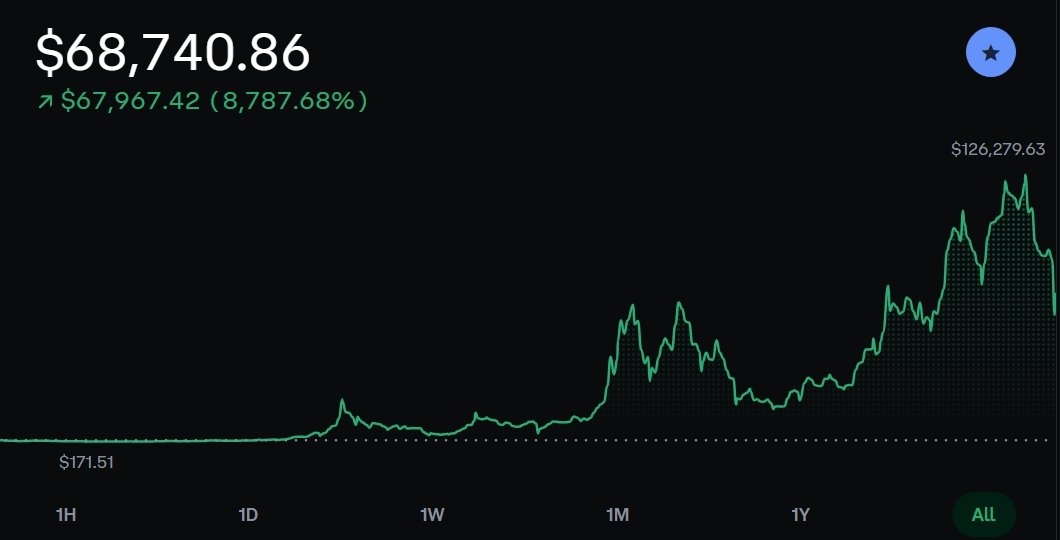
Every previous Bitcoin cycle delivered the same pattern. The 2018 crash wiped out 80% of the value, followed by a 12-month doubling from the bottom. The 2022 bear market erased 78%, then delivered a six-fold rally to new all-time highs by late 2025.
Post-halving years, including the 2024 event, consistently peak 12 to 18 months later, setting up 2026 as the window for Bitcoin to climb past $200,000 as supply tightens and demand accelerates.
Even hardware tells the same story. NVIDIA reported $51.2 billion in data-center revenue for Q3 2026, driven overwhelmingly by AI and cryptocurrency mining demand. Despite trimming RTX 50-series gaming GPU production by 30-40% due to memory constraints, overall mining and AI orders remain near capacity.
None of this is financial advice; you are liable for your decisions and investments.
I think Bitcoin is not nearly finished. Whales cleared out leverage and weak holders, institutions quietly loaded up, and the network keeps growing. This dip ranks among the strongest buying opportunities in its history. If Bitcoin solidifies as a global reserve currency, the wealth divide will widen dramatically, separating those who hold real money from those stuck in depreciating fiat. Get positioned before $200,000 becomes the baseline.