
ShortCircuit put the Reachy Mini Lite through its paces.
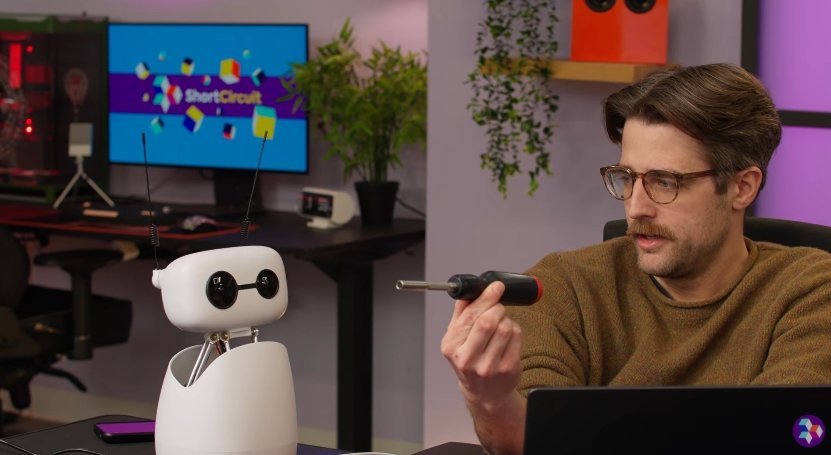
Built by Pollen Robotics and Hugging Face, this 28-centimeter, 1.5-kilogram robot is mostly plastic and aluminum. It has a 12-megapixel Sony camera in its “nose,” four microphones, and a 5-watt speaker. The two antennas on its head are there for show, letting it nod, tilt, or wave in order to "express" itself, but also function as controllers in some user-built apps.

Unlike the full Reachy Mini, which includes onboard Raspberry Pi compute, battery, and Wi-Fi for $449, the Lite version requires a USB-C connection to a Mac or Linux computer for both data and power, with Windows support in beta. Assembly takes about an hour following instructions, and the design prioritizes simplicity over advanced features like grasping or mobility.
The standout aspect is its complete open-source status. Hardware CAD files, software, firmware, and control libraries are all publicly available on GitHub. Users can 3D-print custom parts, modify the body, or build entirely new accessories.
A web-based app, launched via terminal, includes controls for emotions, dances, volume, and microphone settings. It features an "Install from Hugging Face" section where community members upload and share applications.
These apps demonstrate the robot's role as a physical interface for AI models. Examples include conversation tools that connect to LLMs via APIs, vision-based descriptions of surroundings or held objects, music-reactive dancing, simple games, and marionette-style manual controls. The robot easily loads community demos, enabling quick experimentation without deep coding knowledge.
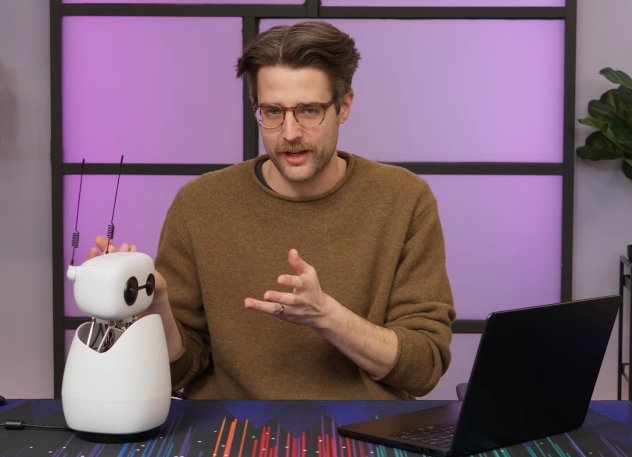
ShortCircuit noted the appeal lies in the open ecosystem rather than groundbreaking hardware. The physical presence - head movements, antenna flicks, and audio from its own speaker - makes chatting with models more engaging than text interfaces, though apps can sometimes glitch or are incomplete.
Reviewers called it fun and approachable for entry-level robotics, especially for education or creative coding, but limited to tethered desktop use.